Swedish minister brings infant to EU meeting in historic first
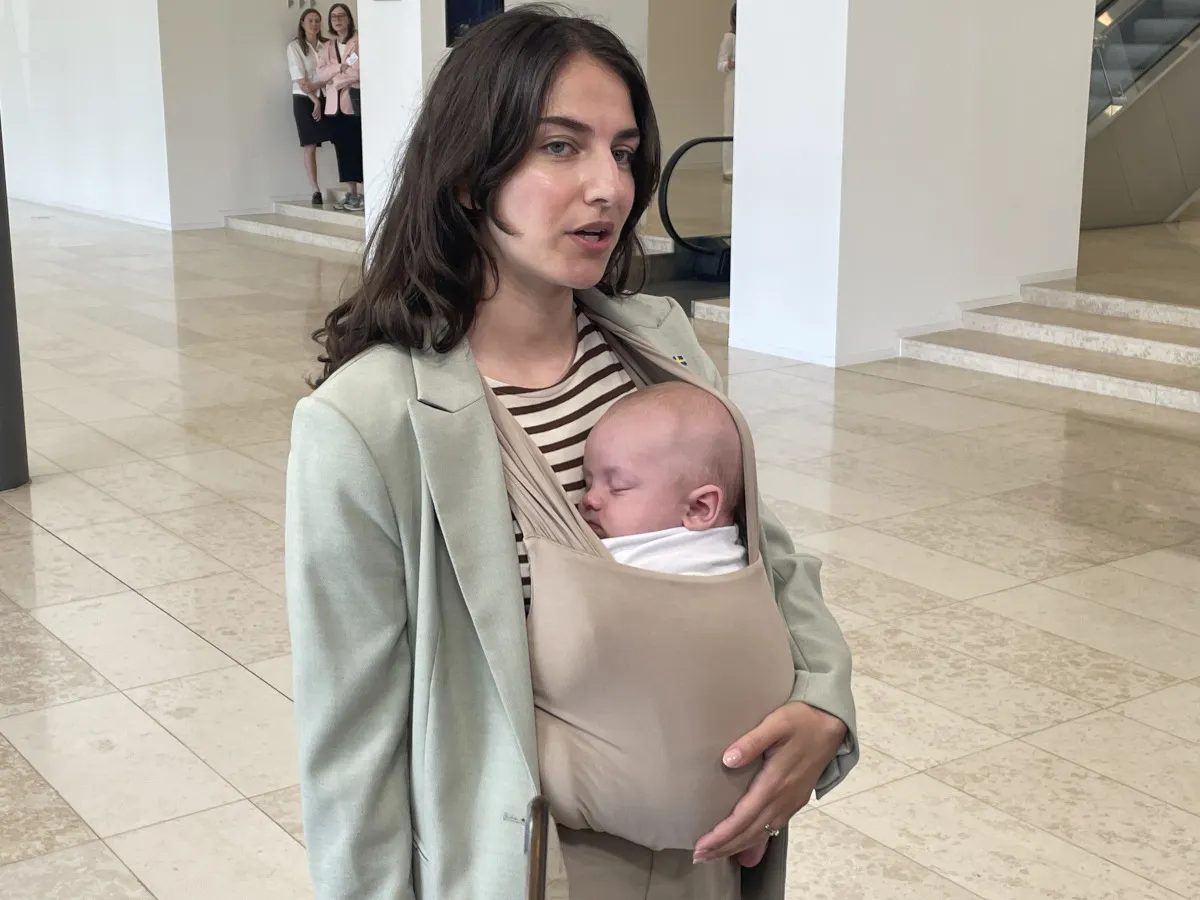
Sweden's environment minister broke convention by bringing her three-month-old son to an EU ministerial meeting, highlighting the institutional shifts required to keep women in senior economic and political roles.
Romina Pourmokhtari arrived at ministerial talks in Luxembourg with her three-month-old son, Adam, secured in a sling. An EU official noted that this was believed to be the first time a baby had been brought to one of the bloc's ministerial meetings. The 30-year-old Swedish environment minister was accompanied by an aide pushing a pram.
"Happy also to be an example of not having to choose between being a present minister and a present mother," Pourmokhtari told journalists as the infant rested on her chest. Her French colleague, Monique Barbut, responded to the scene by promptly presenting the minister with a baby gift.
"There are many things that make Europe a wonderful place to live. One of them being just this, that we can have the possibility of attending meetings and attending to my child," Pourmokhtari added.
While the scene was warmly received, it pointed to a persistent structural flaw across European economies. Mothers remain disproportionately affected by the challenge of juggling work and childcare. Studies demonstrate that women frequently miss out on promotions, career opportunities and higher earnings after having a child. This disparity continues to restrict female advancement in both private sector leadership and public office.
European institutions are taking incremental steps to address these barriers. The European Parliament recently overhauled its internal rules to grant new mothers the right to vote by proxy. This procedural change was designed specifically to make the lives of female lawmakers easier, acknowledging that physical presence in a legislative chamber is not always compatible with immediate postpartum demands.
Pourmokhtari’s decision to simply bring her child to the negotiating table bypasses the need for such procedural workarounds. It serves as a high-profile challenge to the traditional norms of European political and business culture, where senior leadership roles have long been structured around the assumption of uninterrupted availability.
Other global leaders have previously tested these boundaries. Former New Zealand Prime Minister Jacinda Ardern brought her three-month-old daughter, Neve, to the United Nations General Assembly in 2018, marking a first for the organisation. In 2017, Larissa Waters became the first woman to nurse her newborn during an Australian parliamentary session. Ardern remains just the second prime minister in history to give birth while in office, following Pakistan's Benazir Bhutto in 1990.