Record June heatwave exposes Europe's growing climate economic risk

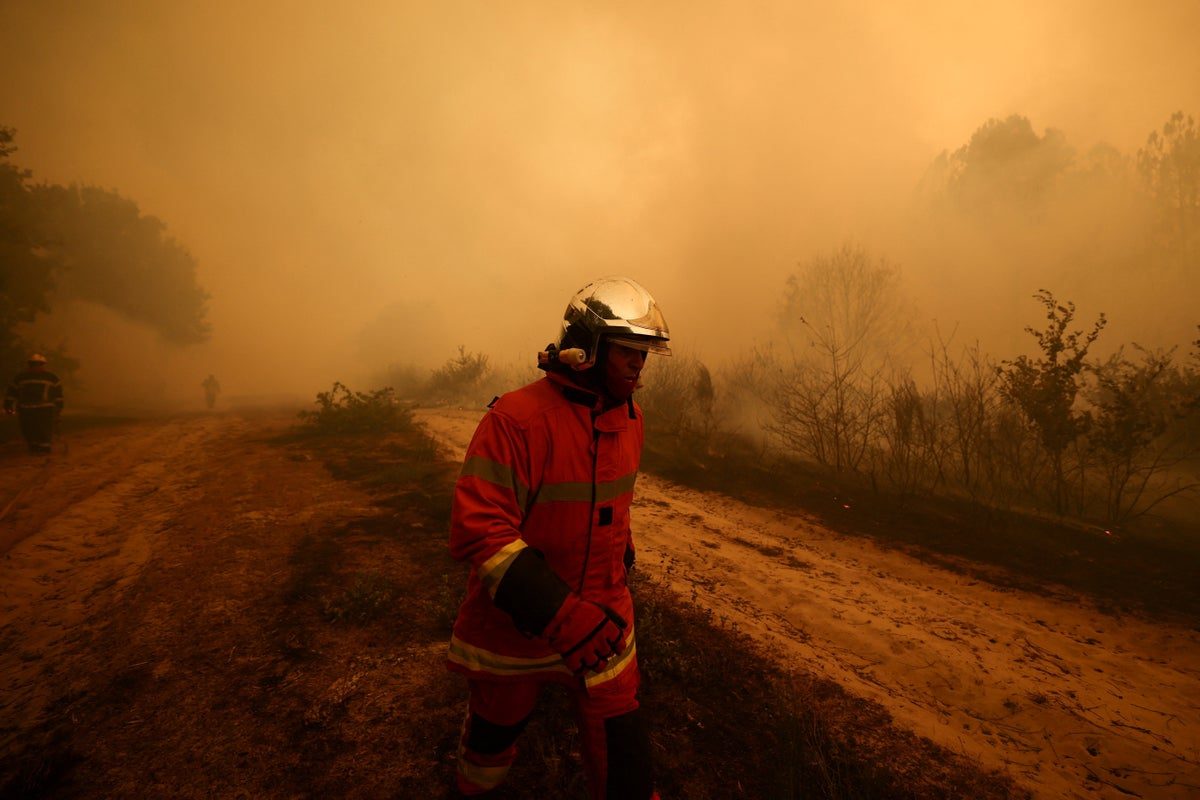
A record-breaking June heatwave that scientists link unequivocally to climate change is forcing European governments and businesses to confront mounting, long-term economic damage.
More than 100 million Europeans endured temperatures above 35C on Thursday as a June heatwave shattered records across the continent. Scientists from the World Weather Attribution group concluded that this extreme weather would have been "virtually impossible" fifty years ago, noting a similar event would have been 3.5C cooler in 1976. "This event would not have been possible in June without climate change," said lead author Theodore Keeping from Imperial College London.
Beyond the immediate health dangers of heat stress, the heatwave is highlighting a profound economic vulnerability. Financial experts and central bankers warn that rising temperatures are no longer a temporary seasonal disruption but a structural risk to European growth.
Allianz Trade has identified "a critical threshold" of around 30C beyond which productivity losses intensify rapidly. Europe is particularly exposed due to an ageing population, dense urban housing, and just 19 percent of households having air conditioning compared to 90 percent in the United States. "France is working in slow mode," observed Patrick Martin, head of France's main employers' organisation Medef. "Inevitably, it disrupts work and leads to less work being accomplished," he told BFM television.
Prolonged damage to output
Research by the European Central Bank indicates that summer heatwaves reduce regional economic activity by around one percent. Crucially, this reduction is not brief; the ECB found the drop in output is prolonged, reaching a trough of 1.5 percent lower after two years. "There is clearly a negative effect on growth in the medium term," said Emmanuel Moulin, the new governor of the Banque de France.
Extreme heat also threatens to complicate the continent's fight against inflation. Higher energy demand for cooling pushes up prices, while heat curtails agricultural yields and disrupts supply chains. The ECB calculated that a 2022 drought alone caused European food prices to rise by 0.7 percentage points, severely impacting crops like olives.
Fiscal strain on governments
The long-term fiscal consequences could be severe. Allianz Trade modelled a stress scenario repeating the five hottest years between 2014 and 2024 over the rest of the decade. It calculated cumulative losses in gross domestic product of between five and seven percent, equating to a $131 billion hit for Germany, $240 billion for France, $147 billion for Italy, and $120 billion for Spain.
Falling tax revenues would collide with the urgent need for higher spending on healthcare and climate-resilient infrastructure. In France, tax revenue could drop by an estimated 1.8 percent, a blow that would worsen existing budget deficits and constrain borrowing capacity. "Without a rapid shift that commits to climate adaptation and carbon neutrality, these phenomena risk becoming a long‑term structural drag on the economy," said Hazem Krichene, a climate and sustainability economist at Allianz.