Europe's AC boom poses emissions risk despite solar power boost
A surge in air conditioning demand during Europe's latest heatwave is highlighting a policy paradox for the continent, as rooftop solar helps offset electricity emissions but refrigerant regulations and urban heat risks threaten to undermine climate goals.
Fatal heatwaves gripping the continent this week are forcing a rapid shift towards air conditioning, with energy analysts noting that rooftop solar is already softening the immediate grid impact.
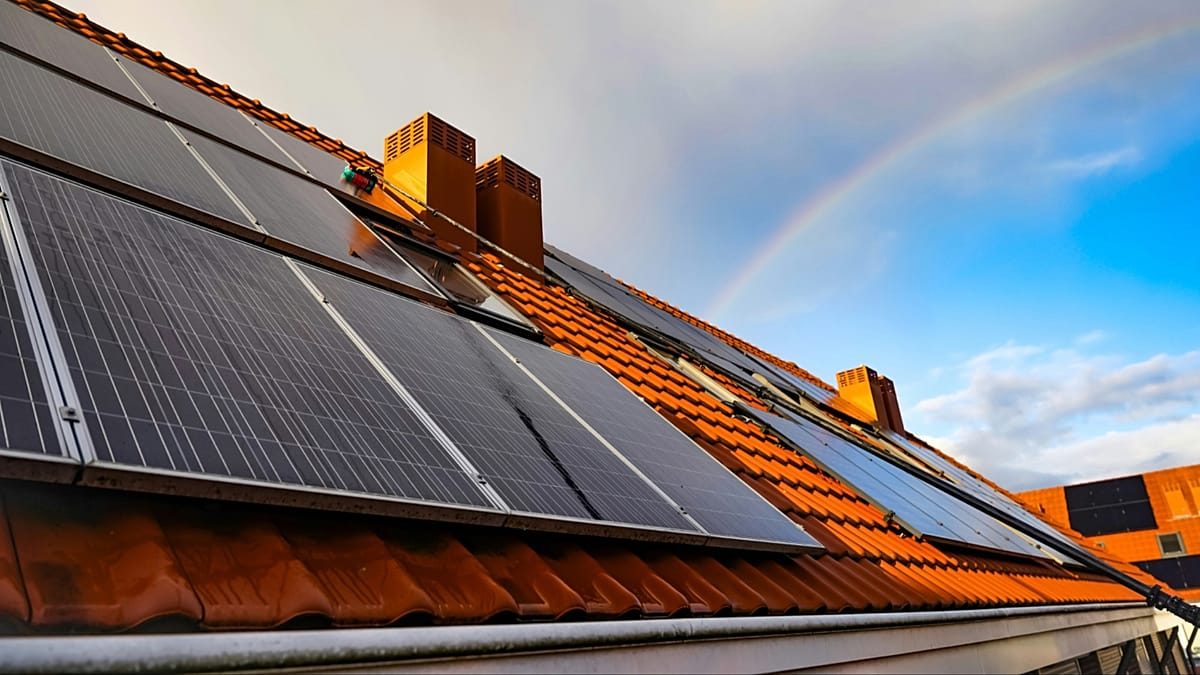
Analysis from energy think tank Ember shows a typical UK rooftop solar setup generated 15 MWh over June 21 and 22. This is enough to power a full-house 3 kW air conditioning unit for five hours per day. Across the UK's 1.9 million solar-equipped homes, this equalled 10 million solar-powered cooling hours per heatwave day.
This demand is only accelerating as intense temperatures shift east into central Europe. The EU is projected to install over 275 million air conditioning units by 2050, up from a historically low baseline. In France, record June temperatures have already triggered political debates over the country's traditional reluctance to adopt cooling systems, while the UK's Climate Change Committee has urged government investment in cooling for schools.
“Solar power and air conditioning are complementary technologies with similar seasonal patterns, though air conditioning use tends to be weighted later in the day,” Ember states. However, solar cannot entirely offset the emissions burden. The International Energy Agency estimates space cooling consumed 2,100 terawatt-hours of power in 2022, generating around one billion tonnes of CO2 from electricity alone. University of Birmingham researchers warn that in a worst-case scenario, AC emissions could surpass current annual US output by 2050.
The climate impact extends beyond power generation. Refrigerants like hydrofluorocarbons trap thousands of times more heat than CO2. According to Our World In Data, AC systems accounted for 3.2 per cent of all global greenhouse gas emissions in 2022.
European regulators are attempting to curb this trajectory through strict chemical bans. The EU is systematically phasing out fluorinated gases in favour of natural alternatives like propane and CO2. A ban on F-gases in smaller, self-contained units takes effect in 2032, with other systems following in 2035 and all HFCs eliminated by 2050.
These regulatory shifts present distinct market complications. Propane is highly flammable, complicating installations that already cost around €2,895 per room in an average UK home. Furthermore, the IEA notes consumers globally continue to purchase units that are only half as efficient as the best available technology, often due to upfront cost barriers.
The physical mechanics of cooling also pose broader infrastructure risks. Dumping heat outdoors exacerbates the urban heat island effect, with the EU's Copernicus Climate Change Service recording night-time temperatures in London and Paris at 4°C above rural surroundings. “As global temperatures rise, we risk being locked into an ‘arms race’ where defending ourselves against extreme heat is causing the issue to get worse,” says Professor Yuli Shan from the University of Birmingham. “The world must transition quickly to cleaner, more efficient cooling technologies while ensuring fair access to cooling, especially for vulnerable populations.”