Frieze Abu Dhabi’s Global Futures section to reflect the 'turbulence and violence of our times'
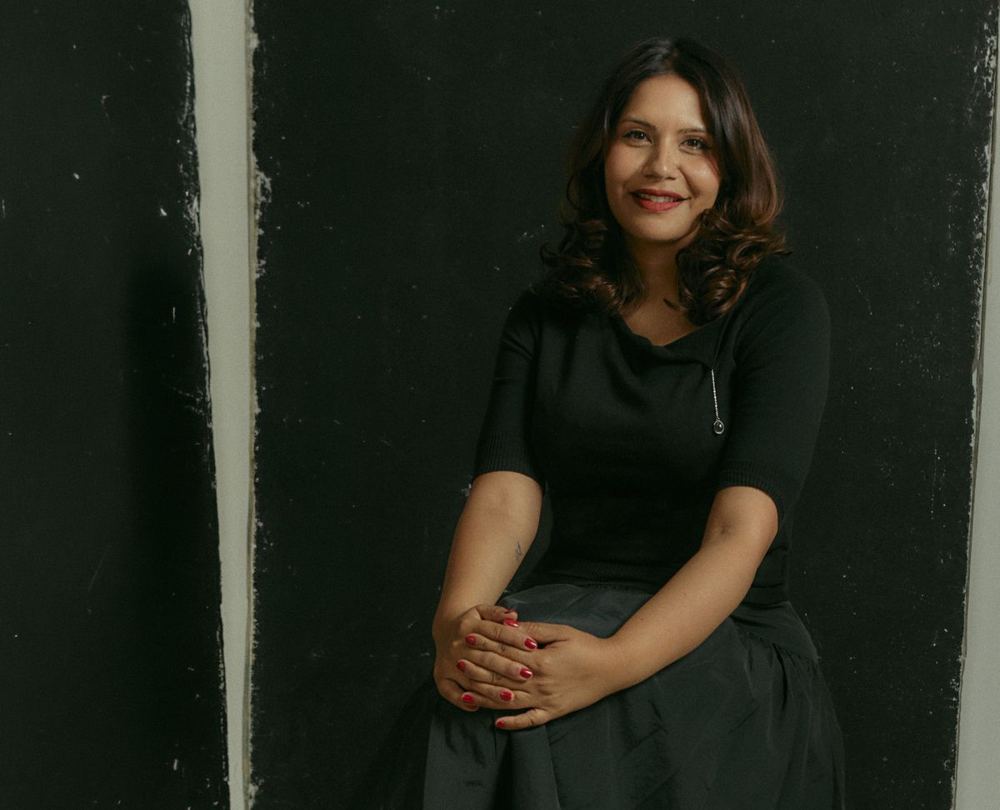
Curated by Tarini Malik, the group of solo presentations features works by Arshi Irshad Ahmadzai, Ala Younis and Abdullah Al Saadi
Abdullah Al Saadi devises an alphabet from sweet potatoes; Ala Younis’s mosaics make monuments from old, nondescript buildings; Mohammed Joha assembles cardboard and textiles as collages addressing displacement.
Disparate as these works seem, they are being shown in dialogue with one another in the Global Futures section at Frieze Abu Dhabi, where they will be presented as unique systems of knowledge that preserve memory and lived experience.
Curated by Tarini Malik, the section features solo presentations by artists from a range of artistic and cultural backgrounds. In some ways, the section builds upon conversations from other parts of the fair. Frieze Masters Abu Dhabi, for instance, will investigate historic routes of migration, trade and cultural exchange across the Indian Ocean. Global Futures appears to attempt this within a contemporary context.
“The process of putting together Global Futures actually came together quite beautifully and organically,” Malik says. “We started with a number of proposals, looking at projects that felt so apt to this moment. We thought about what it means to have a fair, what it means to have this international constellation of galleries at this moment in Abu Dhabi. What are the conversations happening within the cultural sphere that are prevalent to this moment?”
With Taymour Grahne Projects, the Kuwaiti artist Ala Younis will present 11 works from her Climate Conditions series. The mosaic panels, crafted out of hand-cut stones and mounted on metal frames, depict old office buildings, municipal structures and other places in Abu Dhabi that are often overlooked. Younis first unveiled the series in her 2025 solo exhibition at the NYU Abu Dhabi Art Gallery. The project materialised after a three-year stay in the Emirati capital. Knowing the city’s propensity for rapid change, she sought to document and commemorate the structures as she saw them. In rendering their likeness in mosaics, Younis alludes to the Roman tiles that have outlasted the structures they once decorated. The title of the project refers to how the structures interact with the environment, their wood and metal bits expanding and contracting to changes in humidity and temperature.
The Mexican artist Tania Candiani, on the other hand, looks underground for a more sprawling and rhizomatic type of structure. Her Root Systems , presented by Galeria Vermelho, charts networks of plant roots in embroidery, unearthing a subterranean language with its own systems of exchange and communication.
“These projects established two very different but sort of complementary points of departure,” Malik says. “They look at these ideas of migration, of ecology, of transformation, shared across different temporalities and across different structures.”
These themes, Malik says, resonate across the other presentations in Global Futures.
Through his Naked Sweet Potato series, Abdullah Al Saadi transcribes his personal engagement with the landscape of his native Khor Fakkan. Studying the different shapes and textures of sweet potatoes, the Emirati artist renders a language from the vegetable. He makes jewellery from it and he uses it to revisit his childhood, to transcribe his excursions to the UAE countryside. Where Candiani lays bare the universal language of roots, Al Saadi’s Naked Sweet Potato introduces an idiosyncratic and deeply personal lexicon to the conversation. The series includes drawings, paintings, sculptures and engravings, as well as collected materials. First shown at the UAE National Pavilion during the 2011 edition of the Venice Biennale, Naked Sweet Potato will be presented at Global Futures by Aisha Alabbar Gallery.
With Zawyeh Gallery, the Palestinian artist Mohammed Joha will exhibit No Shelter , building upon the series he is presenting at this year’s Venice Biennale (until 22 November). His canvases feature stratified layers of discarded textiles, paper and cardboard that come together as vibrant, abstracted landscapes.
The artist, who is based in France, began the series as he watched the destruction of his native Gaza from afar. His work comes as a poignant expression of heartache, the shredded materials evoking the devastation of Gaza and the forced displacement of its population. The way they come together in colourful compositions, however, simultaneously stands up against the violence, insisting on reconstruction in the face of ruin.
“I looked at projects that reflected the turbulence of our times, the violence of our times,” Malik says. “Things can feel unsettled and art opens up a dialogue for us to understand one another.”
The Indian-born artist Arshi Irshad Ahmadzai, showing at Global Futures with the Mumbai-based gallery Chatterjee & Lal, will be showing her series Azal se Abad tak , which includes drawings and paintings on cloth. The works investigate how different cultures have articulated the concept of eternity.
The Ghanaian artist Godfried Donkor will present paintings, collages and embroidery with Gallery 1957. He draws from an eclectic range of inspirations for his works, including comic book superheroes, boxing athletes as well as mythological figures.
Finally, Marfa’ Projects will exhibit works by the Lebanese artist Seta Manoukian. A celebrated figure of the late 1960s Beirut art scene, Manoukian’s paintings are a stunning, often otherwordly depiction of life during the Lebanese Civil War. The works Manoukian produced after emigrating to Los Angeles in the late 1980s can be regarded as attempts at establishing stability and certainty in the aftermath of the conflict. These include works from her T-Shape series, which will be exhibited at the fair.
“We have work from her Rose series to her Rock series, as well as one of her early more figurative paintings,” Malik says. “In a constellation of around five or six works, we’re trying to build something that feels like a journey through the life of a really iconic artist.”
All in all, the Global Futures section, Malik says, seeks to draw connections between the exhibiting artists in a way that does not reduce the “specificity of where these artists are from and what they’re talking about”.
“I think we’ve chosen works together that really represent [a given] body of work by that artist in the best way possible,” Malik says. “It was really about building shared connections […] while also thinking about how they intersect in the UAE and in this rapidly transforming city.”