European leaders use 1% emissions myth to weaken climate policy
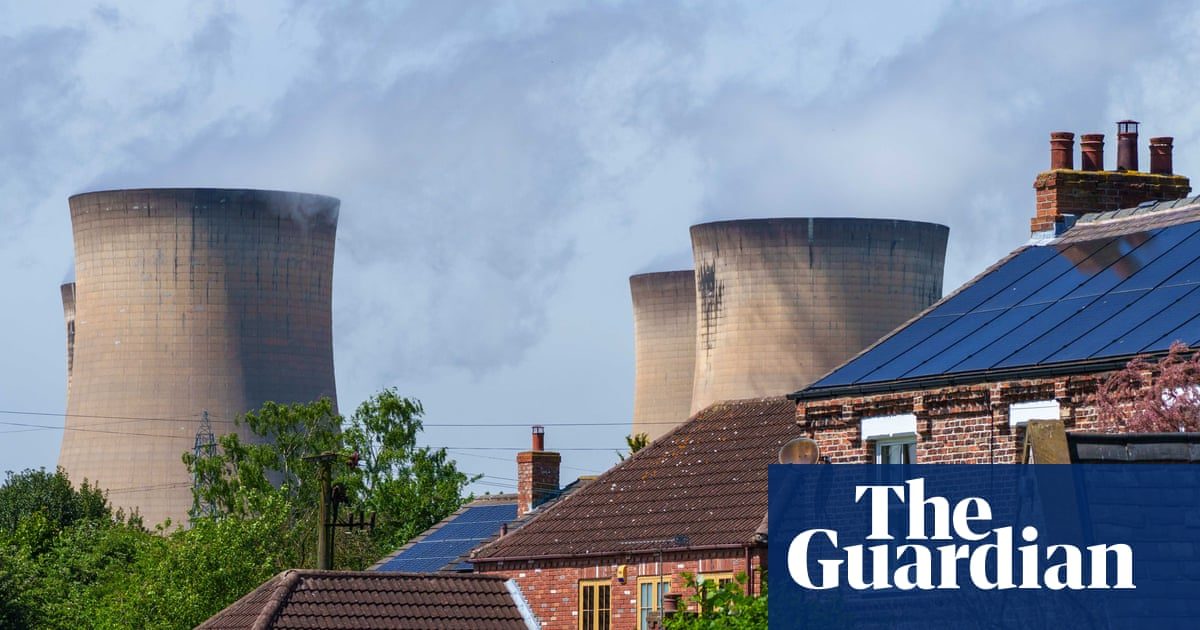
Politicians across Europe’s largest economies are citing their marginal current share of global carbon output to delay green regulations, creating uncertainty for the continent's clean economy transition.
German Chancellor Friedrich Merz and Italian Prime Minister Giorgia Meloni are among a growing group of European leaders using their countries' fractional shares of global emissions to justify weakening climate targets. Merz pointed to Germany’s 2% share to support loopholes in European climate targets, while Meloni followed suit by citing the EU’s 6% share. Over the past two years, far-right leaders and energy spokespeople in western Europe’s five largest economies—the UK, Germany, France, Spain, and Italy—have all deployed this argument to push for policy rollbacks.
This rhetoric poses a direct risk to Europe’s clean economy transition by providing political cover to delay industrial decarbonisation. Former UK prime minister Tony Blair recently used Britain’s 1% share to urge the abandonment of clean economy targets altogether. For businesses and investors, this translates into prolonged regulatory uncertainty just as industries attempt to pivot towards greener operations under existing EU frameworks.
The narrative hinges on comparing national outputs to the combined emissions of the US, China, and India, which produce just over half of current global carbon pollution. However, the remaining 194 countries collectively account for just under half of yearly emissions. Analysis by the Energy and Climate Intelligence Unit (ECIU) identified 200 examples of this statistical argument in the national newspapers of 27 countries last year.
Climate scientists note the argument deliberately ignores the historical emissions of wealthy European nations, which are the primary driver of current global heating. It also overlooks the fact that European progress in cleaning up economies has only recently brought annual per-person emissions close to the global average. “Future warming is driven by future emissions, so every tonne of carbon dioxide that a country or citizen can avoid emitting will improve temperature and heatwave outcomes for generations,” said Professor Piers Forster of the University of Leeds.
The messaging is nevertheless resonating with certain voter bases. A YouGov poll for the ECIU in April found that one in four Britons believe countries emitting less than 1% of emissions should stop trying to reduce them. Half of voters for the Reform UK party held this view, with its leader, Nigel Farage, calling it “absolutely mindless” for a small-emitting country to “beggar itself”.
Dr Ella Gilbert, a climate scientist and ECIU board member, warned that such framing ignores the necessity of a coordinated global effort. “The UK may account for just 1% of current global emissions, but we’re responsible for 100% of our own emissions, and we have the opportunity to show global leadership by bringing them down,” she said. “These leaders wouldn’t like it if the top 1% of their wealthiest citizens didn’t pay their taxes, so the argument is fallacious and simply buck-passing,” Forster added.