UK's Vertical Aerospace eyes military orders as flying taxi launch pushed to 2029
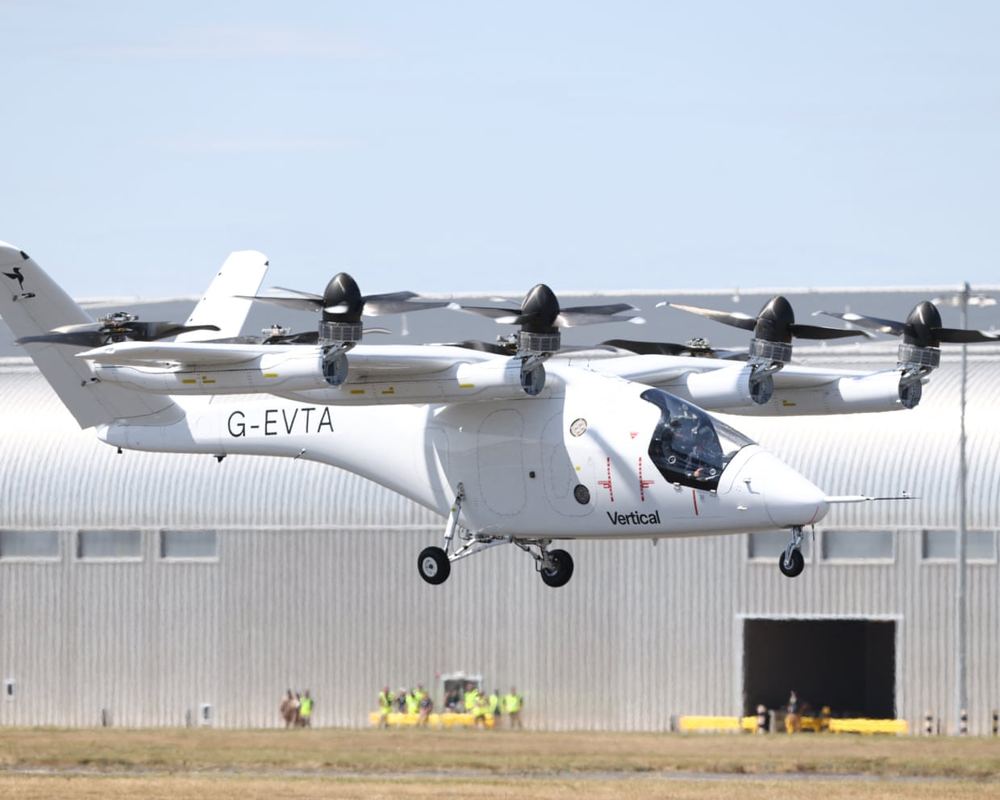
The eVTOL maker demonstrated its prototype at Farnborough and confirmed Ministry of Defence interest in a hybrid variant, even as its passenger service timeline slips four years behind the original target.
Vertical Aerospace flew its electric aircraft through its first public transition manoeuvre at the Farnborough airshow on Monday, shifting from wing-borne cruise to a helicopter-style hover before lowering onto the runway. The demonstration coincided with the company's disclosure that the UK Ministry of Defence has confirmed interest in a hybrid-electric military version of the aircraft.
The military variant would replace the all-electric powertrain with a gas turbine, sacrificing zero-emission operation for a range of up to 1,000 miles and faster refuelling. Chief executive Stuart Simpson said the hybrid's low noise and heat signatures make it attractive for defence use, describing the concept as "dual use" that leverages the same commercial airframe with a different engine.
For a sector that attracted billions during the pandemic investment boom only to see several rivals collapse, Vertical's continued existence is itself notable. The company endured a cash crisis in 2024 that forced out founder Stephen Fitzpatrick, the Ovo Energy owner, and brought in US distressed-debt investor Jason Mudrick as the new controlling shareholder.
The UK government has now deepened its bet on the company's recovery with a fresh £10m grant, lifting total state support to £48m. The funding is linked to Vertical's selection of British sites for aircraft assembly and battery production. The firm plans to build roughly 150 aircraft a year at its existing factory in Kemble, Gloucestershire, with an eventual target of 1,000 annually at a larger facility.
Certification remains the critical hurdle. Vertical originally promised passenger flights by 2025 but pushed that date to 2029 earlier this month. Simpson said the UK Civil Aviation Authority and the EU Aviation Safety Agency have both committed to working toward a 2028 timeline, giving the company a one-year buffer. "We're really confident," he said.
The competition is global. US rival Joby Aviation has already conducted public flights between New York's JFK airport and Manhattan, while Embraer's Eve and Archer Aviation trail further behind. Several Chinese manufacturers are also developing competing aircraft.
If Vertical does reach certification, it promises fares comparable to a ground taxi, arguing that a single aircraft could complete multiple return trips in the time a cab covers one journey from Heathrow to central London. Whether European regulators and passengers embrace the concept by the end of the decade will depend on whether the technology proves as reliable in daily operations as it appeared over the Farnborough tarmac on Monday.