EU rejects Schengen suspension calls as Ceuta migrants barred from mainland
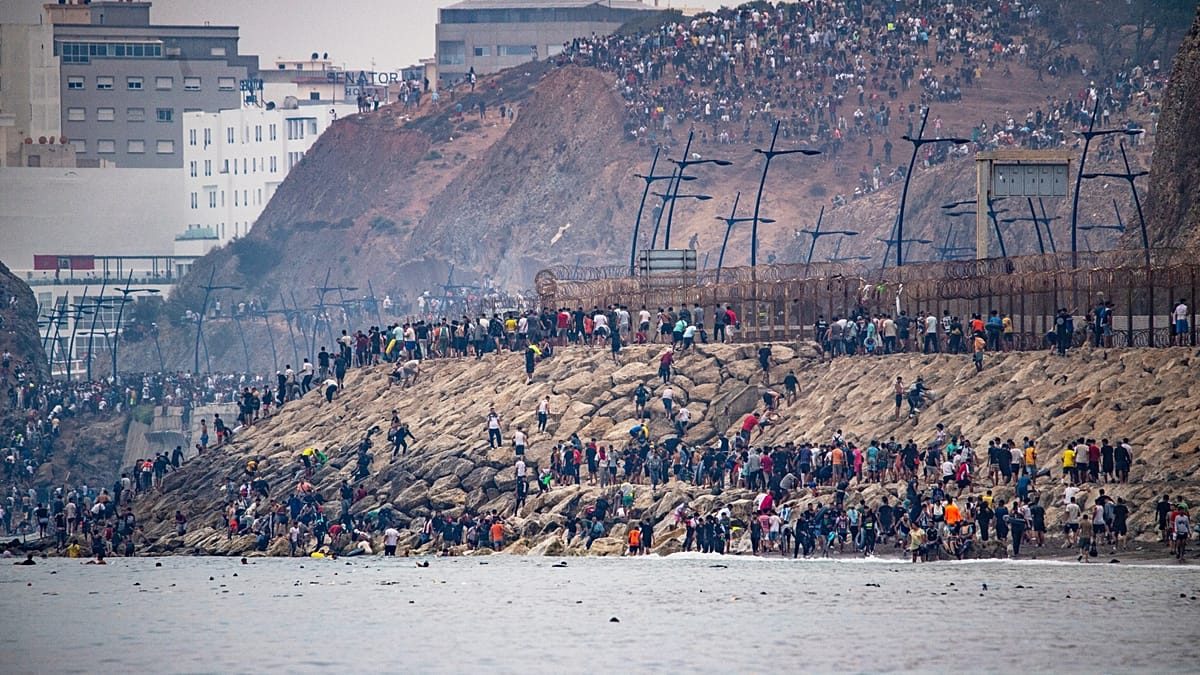
The European Commission has ruled out onward travel for 60,000 migrants who stormed Ceuta, even as several member states demand Spain's suspension from the Schengen area.
Around 60,000 migrants, mostly Moroccan citizens, breached the border of the Spanish enclave of Ceuta on Thursday in the largest surge of irregular arrivals ever recorded on EU territory. The European Commission confirmed on Friday that none of these individuals have moved on to the European mainland.
Despite this legal reality, the sudden influx has triggered a fierce political backlash that threatens to undermine European unity. Italy, Finland and Denmark have accused Spanish Prime Minister Pedro Sánchez of failing to protect Europe's external borders. These governments are now demanding Spain's suspension from the Schengen area, a drastic step that would instantly reintroduce border checks and disrupt the free movement of goods and people central to the European economy.
EU officials pushed back against claims by right-of-centre politicians that the migrants would freely disperse across the continent. "There are no onward movements today towards the European continent," an EU official said. Furthermore, "Checks on people leaving Ceuta and Melilla remain in place under the Schengen system. For this purpose, they are treated as the EU's external border," a European Commission official said.
Under EU law, the free-movement rules of Schengen apply exclusively to EU citizens, valid residence permit holders, and legal travellers. Anyone who entered Ceuta without authorisation cannot board ferries or flights to mainland Spain without passing strict identity checks.
The few who do apply for asylum face an accelerated asylum procedure that entered into force last June, under which detention measures may be applied. Applicants are prohibited from leaving Spain while their claims are pending and face return if found elsewhere in the European Union. Because Morocco is classified as a "safe country of origin" under EU rules, its citizens are generally ineligible for the international protection status required to move freely within the bloc.
The EU Agency for Asylum notes that Moroccan citizens have a recognition rate of just 6%. Consequently, the vast majority of those who crossed are expected to receive return orders. According to Spanish authorities, nearly half of the people who arrived on Thursday have already voluntarily returned to Morocco.