Guest Worker Treehouse in Prime Berlin Faces Demolition
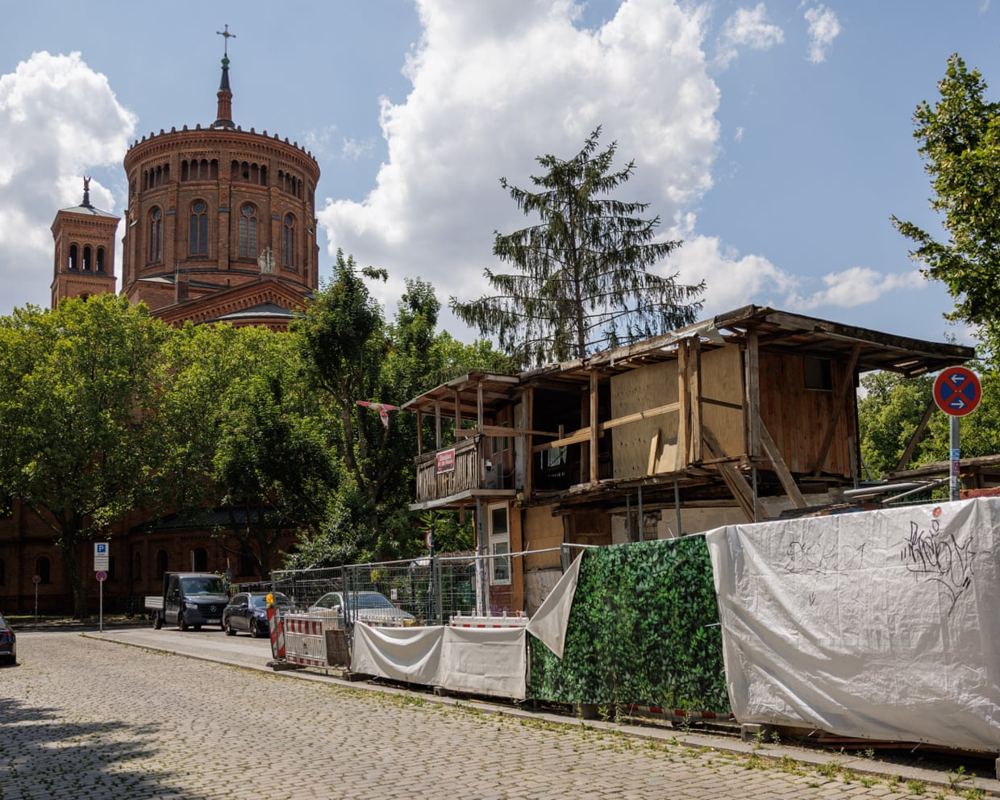
A two-storey structure built by a Turkish guest worker on a Cold War no man's land faces demolition, testing Berlin's approach to urban regulation and the physical legacy of the labourers who powered its postwar economy.
Berlin city authorities are considering demolishing a makeshift two-storey structure known as the Treehouse at the Wall, citing public safety hazards. Supporters of the site, located on a former patch of no man’s land next to the Berlin Wall, are rallying to preserve it ahead of local elections in September.
The dispute highlights the friction between Berlin's strict building codes and the physical remnants of its industrial past in neighbourhoods that have since transformed into prime real estate. The treehouse sits in Kreuzberg, a district historian Stefan Zeppenfeld notes was once relegated to migrant labourers but became highly sought after after the wall fell in 1989.
The structure was built by Osman Kalin, a Turkish manual labourer who arrived in the late 1960s as part of a programme that saw roughly 14 million guest workers arrive in West Germany between 1955 and 1973. These workers were imported to plug severe labour shortages and drive the country's postwar economic miracle, yet Germany has never built a central memorial to them.
In 1983, Kalin cleared a triangular, abandoned scrap of land that sat in West Berlin but officially belonged to communist East Germany due to a quirk in the border's path. He initially planted vegetables before building a shed, eventually securing rare permission from East German authorities to erect a larger structure around a mature tree trunk, provided it did not exceed the height of the wall.
Since Kalin's death in 2018, his son Mehmet has maintained the property, but the building's unauthorised origins have created legal friction. After reunification, the neighbouring St Thomas church used 18th-century papers to claim ownership and allowed Kalin to stay, yet current safety regulations have forced a review. Florian Schmidt, a Kreuzberg district councillor, said his office was working to "grant the necessary permits" for the site to remain, noting that use of the treehouse was "initially prohibited" due to the lack of planning permission.
Suat Özkan, general secretary of a Turkish community group, argued the site deserves formal protection. “We still haven’t managed to construct a central memorial,” Özkan said. “This house should serve as a kind of memorial.”
Zeppenfeld said the building is one of the few tangible legacies showing "agency by Turkish guest workers as a real part of the cityscape." For the local tourism economy, the site also holds distinct value. Adrian Sampson of Alternative Berlin Tours said losing the treehouse would be "an absolute shame, like really a pity for the city, because it just makes a lot of people happy."