EU leaders demand urgent migration talks after 60,000 cross into Ceuta
A sudden influx of 60,000 migrants into Spain's Ceuta enclave has prompted a majority of EU member states to demand emergency talks, testing the bloc's border resilience and capacity for coordinated crisis response.
Around 60,000 irregular migrants breached the border of Spain’s North African enclave of Ceuta this week before the vast majority were returned to Morocco. Spanish authorities confirmed on Saturday that nearly all those who entered since Wednesday have now left. The government stated the situation in Ceuta is nearly back to normal.
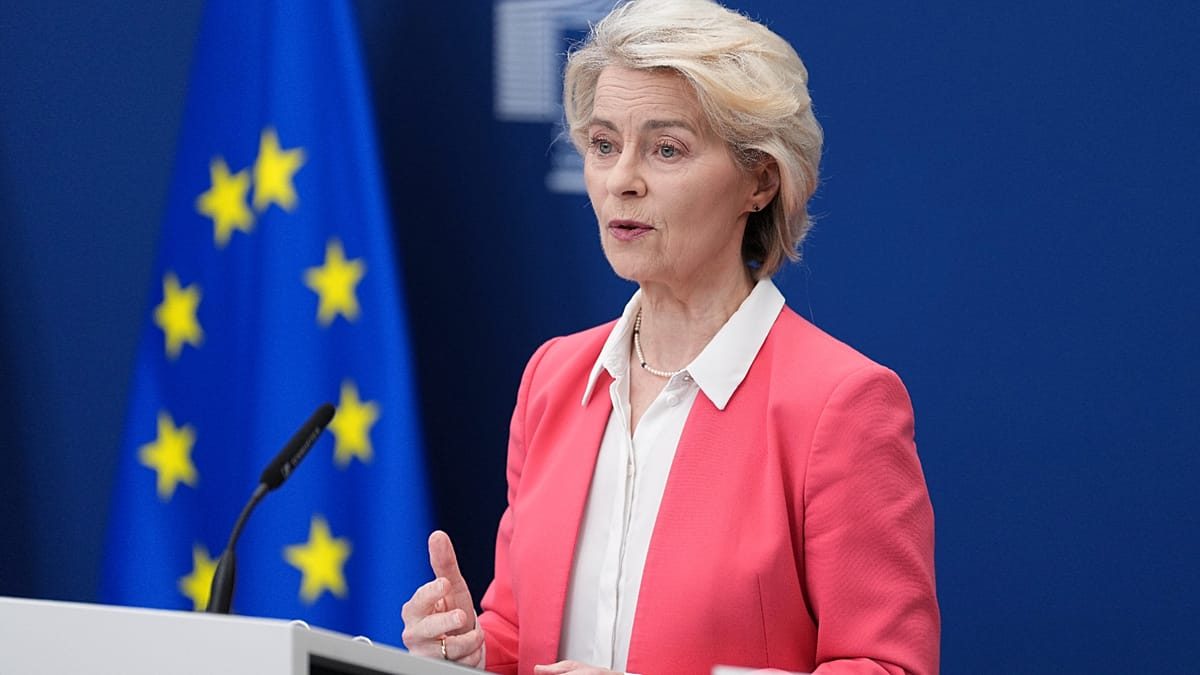
European Commission President Ursula von der Leyen credited swift police action for containing the sudden influx. "Due to the effective work of Spanish and Moroccan law enforcement. Not a single person reached mainland Spain or the rest of the EU," she said. To discuss the unfolding crisis, von der Leyen held a conference call with EU Commissioner Magnus Brunner, who oversees Internal Affairs and Migration, and Dubravka Šuica, responsible for the Mediterranean and Demography.
Despite the rapid turnaround, the sheer scale of the attempted crossing triggered immediate political alarm across the continent. In a rare show of collective urgency, leaders of 22 of the EU’s 27 member states published an open letter on Saturday. They demanded that the bloc's interior ministers hold an emergency video meeting "as a matter of urgency".
The coalition of states pushed for a speedy coordinated response explicitly designed to "prevent further uncontrolled crossings". For European public life and economic planning, the Ceuta event highlights the persistent vulnerability of the EU's external borders. Sudden demographic shifts of this magnitude, even when brief, place immediate strain on local infrastructure, emergency services, and cross-border commerce in frontier regions.
The incident reinforces that Europe's economic stability and internal market operations rely heavily on secure external frontiers and dependable partnerships with neighboring transit nations. Maintaining this operational predictability is essential for businesses operating in southern Europe and for investors assessing regional risk.
Von der Leyen welcomed the push for emergency ministerial talks, framing the crisis as a catalyst for broader institutional reform. She stated the bloc required "a lessons learned process to improve our European resilience." The upcoming discussions will test whether member states can translate the bilateral enforcement success seen in Ceuta this week into a unified, long-term border strategy.