Ninety Thousand A Day
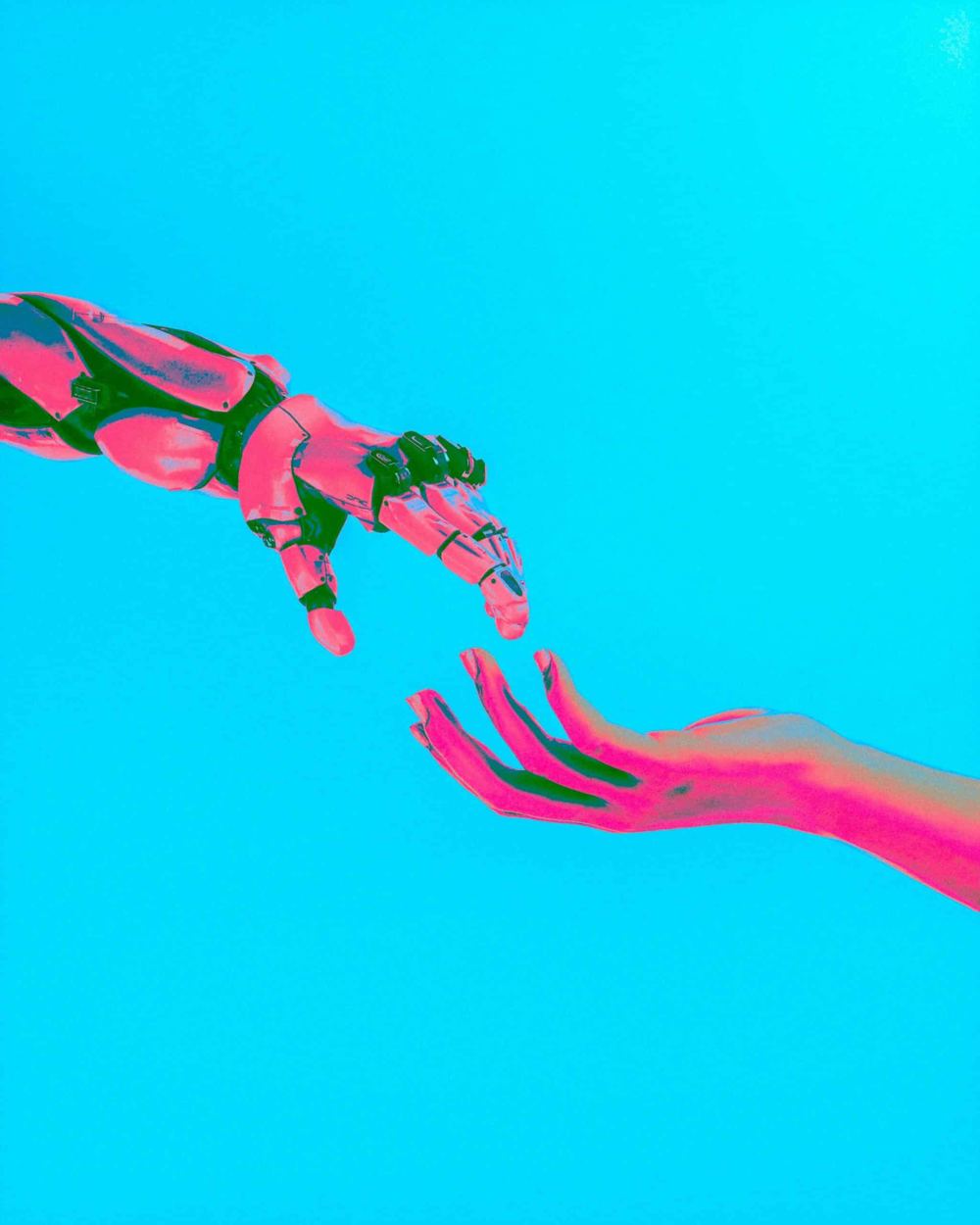
Ninety thousand AI tracks are uploaded to Deezer every day, and almost nobody is listening to them. Ninety Thousand A Day
Ninety thousand AI tracks are uploaded to Deezer every day, and almost nobody is listening to them.
Ninety thousand AI tracks are uploaded to Deezer every day, and almost nobody is listening to them. As ADE 2026 came to Amsterdam, we heard out both sides.
Every October, Amsterdam fills up with people who made something. That is the whole premise of ADE: rooms full of producers, engineers, bookers, label managers and DJs who spent the year turning time into records. It is worth saying plainly this year, because the industry around those rooms is busy building a version of music that doesn’t require any of them.
The numbers are not subtle. When Deezer switched on its AI detector in January 2025, AI-generated tracks made up about 10% of daily uploads, roughly 10,000 a day. By April 2026, that share had reached 44%, around 75,000 tracks a day. By June, AI had crossed the halfway line on peak days , running at roughly 90,000 tracks every 24 hours. Deezer tagged more than 13 million AI tracks in 2025 alone, and it is not the only platform buried in it: Spotify says it removed over 75 million spam tracks in a single year.
Now the numbers that matter. All of that material accounts for between 1% and 3% of actual plays, and up to 85% of the streams it does get have been flagged as fraudulent and demonetized. This is not an audience. It is a flood with almost nobody swimming in it, much of it generated by people who worked out that a 30-second stream can trigger a payout and that a generator never sleeps.
Before getting to the concerns, the argument on the other side deserves better than a straw man, because parts of it are correct.
Electronic music has never had a clean-hands defense when it comes to technology. The TR-808 was a commercial failure that became the backbone of three genres. Sampling was called theft before it was called hip-hop. Auto-Tune was a repair tool, then a punchline, then a sound people chase on purpose. Each arrived with somebody insisting it was the end of real musicianship, and each one widened what a person alone in a room could make. A scene built out of machines does not get to be precious about machines. AI is already in plenty of studios too, from stem separation to mastering tools, and The Beatles’ ‘Now and Then’, which used machine learning to lift John Lennon’s voice from an old demo, won a Grammy in 2025.
Diplo has made the most-quoted version of the argument this year, and he did not soften it. On Daniel Wall’s Behind The Wall podcast in April, he said: “You’re not going to win. There’s no fighting AI. You have to just work your best to be the best at it right now.” He went further on vocals: “I can get the best voice from AI. I don’t need anybody to sing the song anymore.” He then wrote on X that “if you are a creative you need to adapt or just like give up and become an Uber driver.” Timbaland has been saying a gentler version since 2023: “It’s going to really be a new way of creating and a new way of generating money with less costs. I’m already here. This is what I’m doing. I’m going to lead the way.”
The business has moved the same way, and not always cynically. In August, Suno signed a global alliance with BMG covering its recorded and publishing repertoire, settling prior use and putting opt-in compensation in place. BMG’s Celine Joshua framed it in terms that are hard to argue with: “The future of AI in music will be defined by whether artists and songwriters remain at the center of the opportunity and share in the value it creates. Choice is the guiding principle.” A month later, Universal Music and ElevenLabs announced a multi-year licensing deal, ElevenLabs’ first with a major, struck after a $500 million raise at an $11 billion valuation. Sir Lucian Grainge called it proof that “responsible AI can inspire discovery, deepen engagement between artists and fans, and unlock new revenue opportunities for the creative community.” Some artists are leading the way themselves: Holly Herndon built Holly+, a model of her own voice that others can use on her terms, and Grimes offered to split royalties 50/50 on songs made with an AI version of her voice.
Consent and payment were the strongest arguments against all this, and they are being settled in boardrooms. That leaves the harder question, and it is not one a contract can answer: not who gets paid for the music, but who makes it. The 808 removed a constraint. A generator removes the decision, and the decision was always the part that made it music.
On the 20VC podcast in January 2025, Suno’s CEO Mikey Shulman explained the product’s reason for existing. “It’s not really enjoyable to make music now,” he said. “It takes a lot of time, it takes a lot of practice, you need to get really good at an instrument or really good at a piece of production software.” Then the line that drew the most criticism: “I think the majority of people don’t enjoy the majority of the time they spend making music.”
He has since said he regrets the wording. “I really wish I had chosen different words,” he told Billboard in March 2026, adding that he does have “a lot of respect for music.” But, in our view, the wording was never the problem. It was a fairly accurate description of the product. Critics would say Suno is not built for people who want to make music, but for people who want to have made music, which is a different appetite entirely, and a far bigger market.
Look again at what that market produces: ninety thousand tracks a day, for somewhere between 1% and 3% of plays, with up to 85% of the streams they do get flagged as fraud. Not all of it comes from Suno, but this is a product whose output almost nobody chooses to hear, and that is not a failure of the technology. It is the shape of the thing. The satisfaction is in the generating. The track is a by-product.
Investors clearly back the idea. In June, Suno raised over $400 million at a $5.4 billion valuation in a round led by Bond Capital. More than 100 million people have used the product, and two million of them pay for it, which is a serious business by any measure. None of it depends on anybody hearing the results. The money is in the generating, and it always was.
None of which would matter if it stayed where it was made. People have always made music nobody listens to, and rightly so: that is where every one of us started, and nobody needs a license to enjoy themselves on a laptop. The harm is that the by-product gets uploaded. It lands in the same stores, the same playlists, the same submission inboxes and the same royalty pool as records somebody spent a year on, and it arrives at a rate no human catalog can match.
Suno conceded as much in August. Alongside four principles, watermarking and fingerprinting, it capped mass distribution to streaming platforms: “these changes won’t affect the vast majority of our users, but they will make large-scale abuse much harder.” If the songs belonged in the pipes, there would be nothing to cap. It suggests the company sees the problem too.
So the question for ADE this year was not whether AI can make a decent track. Often it can. The question is whether an entertainment product, aimed at people who would rather not learn an instrument, should flow into the same pipes as our records.
The bigger concern is not that a machine can make a passable track. It is what the volume does to everyone downstream.
Start with discovery. In September, SubmitHub began blocking any submission its detector scores at 85% or higher as AI, at a cost of about 10% of its revenue. Roughly 11% of what was uploaded in the previous month crossed that line. Curators approved those tracks 16% of the time, against 31% for everything else. A promotion platform is giving up a tenth of its income to keep the pipe clean.
It followed a move by Spotify. On 11 August, Spotify announced that it will begin badging AI Persona profiles with a label that, in its words, “signals to listeners that an artist’s identity may be AI-generated and does not represent a real person.” It also confirmed that “by default, Spotify will not include AI Personas in any editorial or algorithmic recommendations.” Selling promotion for tracks that will not be recommended makes little sense. Beatport went further still, blocking fully and majority AI-generated music at ingestion and tagging the rest, with Beatdapp handling detection. CEO Matt Gralen put the principle plainly: “There is a difference between a tool that assists human creation and a system that replaces it entirely.” Beatport’s own survey found 60% of DJs would not play an AI-generated track, and 77% of them said it was about supporting human creators.
And there is a cost with no price on it. An AI track appeared on the verified Spotify page of Blaze Foley, the country songwriter who has been dead since 1989. The man who manages his catalog called it “AI schmaltz” and, more simply, “this is not Blaze Foley.”
They are not Luddites, and several of them built their careers on machines.
Start with the one who answered Shulman without ever naming him. Most recently, Fred again.. posted a note he wrote a year ago and found again in his phone. “The opposite of AI music maybe isn’t human music. It’s making music,” it begins. “The process is the magic.” He describes that process as his “meditation, daily compass”, and says he has felt “no pull whatsoever to even try” a generator: “I place so so so much of my identity in that process.” Handing that part to a machine, he writes, “would be intrinsically contrary to what I love about the whole thing.” Then the line that sums up his view: “ the clumsy dedicated tumbling towards an idea is the thing we are most lucky to get to do. The hours and hours and years and years of endlessly trying to make the thing you wish could exist. ”
It runs directly against Shulman’s view, and it comes from one of the decade’s most successful producers, who, by commercial logic, would arguably have plenty to gain from doing it faster.
“The opposite of AI music maybe isn’t human music. It’s making music.”
Sting, on the BBC this September, was almost cheerful about it: “I think AI can make perfectly serviceable pop music that you might hear in a railway station or a hotel lobby, and you can hear it, but would you listen to it?” His reasoning is simple: AI “doesn’t have a story; it has a borrowed story, so you’re not really hearing a song.” He does not feel threatened either, because people “want to see a human being, a vulnerable human being who can make mistakes and not a machine that is perfect.”
Thomas Bangalter, who built a career out of machines, told Chanel’s Yana Peel at Art Basel that he is “not really interested in the creative usage of artificial intelligence for many reasons,” because “the most interesting part of the creative process is happening not at all on an intellectual level or on an expressive level … it is about understanding your feelings.” Gary Numan, who has been making electronic records since before most of ADE was born, put it more plainly: what you hear in an AI track is “a learned copy of a human experience. It’s not real.” Kehlani, on an AI act signing a $3 million deal, was blunt: “I don’t respect it,” and “nothing and no one on Earth will ever be able to justify AI to me.” More than 200 artists, including Billie Eilish and Pearl Jam, signed “Stop Devaluing Music” in 2024 over companies “without permission, using our work to train AI models.”
The engineers who finish records have their own doubts. When three Grammy-winning engineers, Leslie Brathwaite, Lu Diaz and Preston “Prizzie” Reid, argued this out for us in September, they started optimistic, neutral and skeptical, and finished with their positions more or less swapped. The line that stuck: “half the records people love contain an error that became the identity of the track.” And its counterpart: when a model gets something wrong, nobody calls it a happy accident; they call it a hallucination.
The listener data cuts the same way. In a Deezer/Ipsos study, 97% of people could not tell AI tracks from human ones in a blind test, and the same study found 80% want AI content labeled and 52% want it kept off the main charts. People cannot hear the difference. They still want to know.
Here is the one we keep coming back to. What if Avicii had used AI for his vocalists?
On 22 March 2013, he walked onto the main stage at Ultra and played four unreleased records (“Wake Me Up”, “Hey Brother”, “Addicted to You” and “Dear Boy”) with Aloe Blacc and Audra Mae singing and a live band behind him, banjo and fiddle included. The voice on the recorded version of “Hey Brother” belonged to bluegrass singer Dan Tyminski. Miami did not like it. “When we performed at Ultra, it was just awkward,” Blacc remembered. Three months later, “Wake Me Up” was released. It went to No. 1 in 22 countries, became the first dance record to sell four million copies in America, and finished the 2010s as the decade’s highest-charting dance track in the U.K.
It is hard to see a model offering him any of that. A generator returns what has already worked, and in March 2013 a bluegrass vocal over house chords was the opposite of what had already worked. The crowd in front of him said so out loud. Ask a generator today for something that sounds like Avicii, and it will oblige, convincingly enough that most listeners would not clock it, because it has Avicii to copy. Ask it for what Avicii actually did in 2013, and it has nothing, because the training data only knows what the room already liked.
That is the part many artists want to protect. Every sound this scene is built on arrived as somebody’s bad idea, defended in a room that was not convinced yet: the hours with a singer who is not quite right until, on the ninth take, they are; the melody that takes four days because the first three were wrong. None of that is efficient, and none of it is supposed to be. The risk is not that a machine writes a hit. It is that the next Tim Bergling, at the exact moment he is about to do the thing the data hates, is offered a faster way, and takes it.
Some steps are already on the table, and ADE week in Amsterdam was the place to discuss them. Label AI tracks clearly, everywhere. Block at ingestion, as Beatport has. Keep synthetic material out of the charts. Train on nothing you have not licensed with consent. And for DJs, the 60% figure is worth thinking about: the track you drop at 2 am is a vote for whoever is still going to be making music in five years.
Undoubtedly, AI will make many aspects of music production easier, and workflows will improve. However, there’s a line to be drawn when it comes to creativity. Are we listening to an artist’s original composition, or an AI-trained model of what is supposed to sound good? Saturating digital streaming platforms with AI-generated music risks pushing those with original creativity down the ranks.