AI tracks surpass human uploads on European streaming platform Deezer
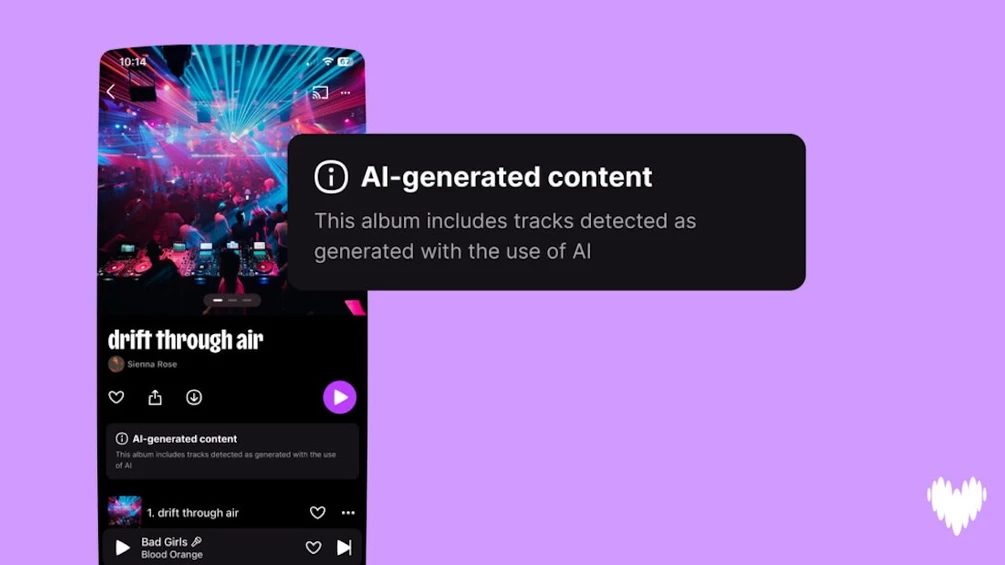
AI-generated music now accounts for more than half of daily uploads on Paris-based streaming service Deezer, forcing the company to ramp up demonetisation efforts to protect human artists from royalty dilution.
Paris-based streaming service Deezer has revealed that artificial intelligence-generated music now accounts for more than half of all tracks uploaded to its platform each day. Around 90,000 AI tracks are submitted daily, marking a sharp rise from 75,000 in April. This is the first time AI-generated music has overtaken human-made music in daily upload volume on the service.
The surge represents a direct threat to the streaming economy, where mass uploads of algorithmic tracks risk severely diluting royalty pools meant for human songwriters. Automated uploads can clog catalogs, siphoning fractions of a cent away from legitimate creators across millions of low-engagement plays. To combat this financial drain, Deezer is escalating its policy of removing and demonetising AI-generated content.
“Deezer has been at the frontline of fighting fraud and reducing payment dilution related to AI music for almost two years”, CEO Alexis Lanternier said. “Now that half of all daily uploads are AI-generated tracks, we are taking additional steps to safeguard the rights of artists and songwriters, while maintaining focus on music that fans actually love.”
The French company is not acting alone, as the broader audio sector scrambles to establish viable market boundaries for generative content. Deezer’s proprietary AI detection tools were launched across 20 different streaming platforms in June, signalling a push to standardise filtering infrastructure. Last month, TIDAL announced a new policy excluding fully AI-generated music from royalty payments entirely.
Other digital music marketplaces are adopting varying degrees of friction. Bandcamp banned music that is "wholly or substantial[ly]" AI-generated at the start of the year. Meanwhile, Traxsource and Apple Music have introduced transparency tagging systems to disclose when AI is used in production.
Not all platforms are erecting strict barriers. A May licensing deal between Spotify and Universal Music Group allows fans to use AI to generate remixes of songs, provided they have the artist's permission. The need for such varied industry defences is underscored by consumer perception: a November 2025 study found that 97% of people cannot distinguish between human- and AI-made music.