How Sasha & John Digweed’s ‘Northern Exposure’ made an artform of the DJ mix CD
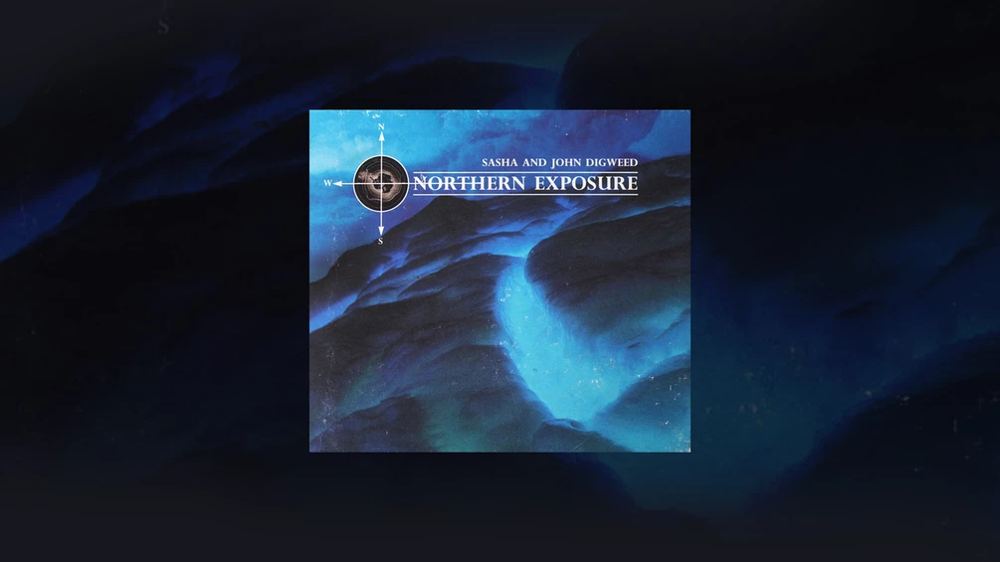
First released on 27th September 1996, Sasha & John Digweed’s ‘Northern Exposure’ remains a landmark moment in electronic music world-building – a sprawling, atmosphere-driven journey that transformed the DJ mix CD from a distillation of the dancefloor experience into a standalone artform in its own right. Here, as the iconic album gets a 30th anniversary redux on Late Night Tales, Simon Whight speaks to the duo – alongside some notable fans and affiliates – about its creation, the technology that made its composition so radical, and the lasting influence it continues to have on a new generati
If there was ever a case of " Second Album Syndrome" applying to a mix CD, then it was a distinct possibility facing Sasha & John Digweed when it came to following up 1994’s 'Renaissance: The Mix Collection'.
The bar was set high. The British DJ duo’s debut mix album was a seminal three-CD set crammed full of tracks that captured the energy of their residency at the Renaissance club, swerving from hypnotic proto-prog, acid house and rave workouts into early trance slammers. Commercially, it was stratospheric, going gold with over 100,000 copies sold in six weeks when others of its kind would just about shift 10,000. It made household names of the pair behind it, but their biggest statement was still to come.
Two years later, on 27th September 1996, Sasha & John Digweed released 'Northern Exposure', a digitally constructed double-CD set conceptualised as two distinct journeys, '0° North' and '0° South'. Where ‘Renaissance’ had been an end-to-end distillation of the rave experience, this two and a half-hour odyssey evoked something deeper, trippier and more atmospheric than your average dancefloor, reshaping everything they were already known for with added cinematic heft. Long ambient segues, cross-continental breaks, progressive house, and trance cuts converge into a singular creative vision throughout these sessions. Here, the mix CD became something more than just a reflection of a night out, or a demonstration of a DJ’s live chops, it was an artform in its own right.
One thing was certain for Sasha and John when it came to planning their second mix album, they weren’t just going to create a by-the-numbers follow-up. "It was a left turn from what we'd done before, and that was a conscious decision,” says Sasha, speaking to DJ Mag over a video call ahead of the release of ‘Northern Exposure: Redux’, a remastered and expanded 30th anniversary reissue on Late Night Tales. “The mix compilation format had really gone through the roof since ‘Renaissance’, and we wanted to do something people weren't expecting."
While ‘Renaissance: The Mix Collection’ was firmly rooted in a UK dance music institution, and its successor was signed up for release through another, Ministry Of Sound, the duo’s horizons had widened significantly by the time they came to create ‘Northern Exposure’. Months spent on the road in the aftermath of ‘Renaissance’ had introduced them to club scenes and communities across the globe, and they soon became immersed in the psychedelic sound of North American rave culture.
"We were doing long six-hour sets, then going to an after-hours and playing for another four hours," Sasha remembers. "The local guys at these after-hours would be playing this incredible music, and I was like, ‘Where's this from?’ It was all these little labels from Tampa, Orlando, San Francisco, these pockets of wonderful producers making incredible music. It really influenced us, and then I'd bring that music back to the UK and play it to people."
You’ll sense the energy of those afterparties throughout the first half of 'Northern Exposure’, transmitted through tracks from Young American Primitive, Rabbit On The Moon and God Within. But first impressions are everything when getting someone to commit to a full session, and bettering the triptych of Leftfield 'Song Of Life' remixes that opened the first CD of 'Renaissance' was certainly going to be a tall order.
The pair struck gold with The Orb's rework of Keiichi Suzuki's 'Satellite Serenade' , a sprawling post-club ambient house curveball that opens '0° North' with clear message to listeners, your expectations were about to be challenged. "Why don't we open the record with a slide guitar and David Attenborough and an 808?" Sasha remembers thinking. "There was a fearlessness to people making music back then."
“It was quite a long process to create, but at the time we could feel that this was game-changing, it felt like we were breaking whole new ground when making a compilation album.", John Digweed
From there, '0° North' cycles through a handful of dynamic resets, like meditative pit stops between sonic biomes. The synthesised strings of Morgan King’s ‘I'm Free’ melt into the mix in a moment of sublime serenity; Ultraviolet’s ‘Kites’ , featuring Sasha collaborator and legendary trance vocalist Maria Nayler, drifts into Fuzzy Logic's 'Obsession' featuring Erire, a gorgeous contextual handover that feels tangible, like the passing of a microphone. A final vibe shift arrives via Spooky's retouch of William Orbit’s ‘Water From A Vine Leaf’ , before the chugging synths of Apollo 440’s ‘Liquid Cool (Deep Forest Ice Cold @ The Equator Mix)’ morph into the actual steam-train chugs of ‘ Last Train To Lhasa ’ by Banco De Gaia echoing the transcontinental journey laid out at the very start.
Initially, '0° South' maintains the glacial atmosphere of the first session, but you can feel the change in energy right from the first bar of Dope On Plastic’s ‘Wave Dub ’. Storm clouds form as the album commences its route back toward the dancefloor, best illustrated by the moment the dark bass stabs of Junior Vasquez' rework of Pete Lazonby's 'Wave Speech' emerge. Elsewhere, Underworld provide two tracks in the form of their Rez-meets-disco retouch of Drum Club’s 'Sound System' and the iconic finale of 'Dark & Long (Dark Train)'. Along the way, longtime Sasha & John Digweed favourites Evolution and The Light build trance-edged tension that pays off in X-Tracks' icicle-arpeggio breakdown in ‘ Plan '94 (The Voyage)’ , reaching euphoria without ever feeling saccharine.
This evolution in sound for Sasha & John Digweed was only made possible by an overhaul in approach. The release was billed as one of the first major DJ mixes to be digitally constructed, a method that allowed for a meticulous assembly that went beyond the boundaries of vinyl. "Working alongside studio engineer Gaëtan Schurrer, we used an early version of Logic to mix this album," John explains. "This allowed us to extend elements of the tracks so they fitted perfectly how we wanted them, also allowing us to add reverbs, echoes and other effects."
"Sasha and myself are both perfectionists when it comes to mixing records together and wanting the transitions to sound perfect,” says John. “It was quite a long process to create, but at the time we could feel that this was game-changing, it felt like we were breaking whole new ground when making a compilation album."
"It just blew my mind that we could take the end of a record and loop it for two minutes over another track," Sasha says. "I was like, ‘What? Wow, let's do that.’ We had very basic plugins, reverb and delay, and that was about it. It’s become the standard now, you can do it live with a CDJ, you just hit the button."
The precision was breathtaking, with the digital process allowing for creative transitions that would have been impossible through conventional beatmatching. Throughout '0° North', long stretches of interwoven audio demonstrate an approach to mix composition that required a bit more than just a human and a pair of 1210s, such as the subtle looping and layering of the arpeggios in 'These Waves' , planted early, almost subliminally, over the lysergic ambience of Future Sound Of London’s ‘Cascade (Part One)’.
Even in the clubbier '0° South', this seamless approach carries on. Listen to how the disco pulse of Drum Club's 'Sound System' echoes into the mind-melting breakdowns of Patrick Prins AKA Castle Trancealot’s ‘The Gloom’ . In the mix’s final stretch, tracks from Mellow Mellow, Banco De Gaia, and Humate & Rabbit In The Moon dissolve into one another through acid-tinged psyhedelia before 'Dark & Long' takes hold. One can imagine a young DJ at home, poring over the graphical timeline adorning the CD’s inlay trying to make sense of it all, like someone struggling to find the start of a roll of sellotape.
"We got zero out of ten for [the '0° South' disc] from DJ Mag. The guy absolutely tore into us, 'Who the fuck do these guys think they are!?' Funnily enough, about four years later, they voted it the best mix ever.", Sasha
Critics didn’t get it at first. "There was definitely a mixed reaction,” John recalls. “It wasn't an instant hit, which probably helped it more, as you really needed to listen to it a few times to get your head around it."
"We got zero out of ten for [the '0° South' disc] from DJ Mag,” adds Sasha. “The guy absolutely tore into us, 'Who the fuck do these guys think they are!?' Funnily enough, about four years later, they voted it the best mix ever."
"People didn't have the luxury of streaming platforms back then, so they were more likely to go back to a purchase and give it another listen," says John. "The album became a grower, and a go-to after-party soundtrack.”
Still, despite some initial raised eyebrows from the media, ‘Northern Exposure’ was objectively a huge success on release, reaching No.7 in the UK compilations chart. It might not have had the same immediate impact as ‘Renaissance: The Mix Collection’, but it’s arguably gone on to be an even more significant release in the progressive house and trance canon. The duo, however, see it as something less definable.
It lends credence to the argument that progressive was never really a specific sound to begin with, but more an expansive grab bag of forward-thinking electronic music spread across a range of styles. "It's always been about finding great records regardless of genre,” says John. “I can't think of anything worse than just playing one genre for an entire set.”
Sasha puts it even more bluntly. "There's been a terrible homogenisation of progressive house," he says. "If I go to the Beatport Progressive House chart, I'm like, ‘This is not the music I like or play’. It's shit, most of it."
"It was as if the mix was a story that didn't care about genres or vibes, every track was a carefully selected chapter.", Lloyd Barwood, Last Night On Earth
Whatever label you want to put on it, ‘Northern Exposure’ is still cited as an enormous influence by countless electronic music artists, progressive and otherwise, today. For UK-based DJ, producer and Magicwire label founder Gabriola , it practically served as a sacred text. "The fact that in 1996 this thing made it into the Top 10, with Future Sound Of London, Young American Primitive and Banco De Gaia on it, shows the impact it had," he notes. "‘Northern Exposure’ was not just a listening experience for me, it was an aesthetic education and a masters course in taste and composition... It made me realise that sequencing mixes isn't just putting two tracks that are in key next to each other, but creating arcs, moments of collapse and of sheer bliss.
More than that, the album has directly guided much of his own work. "I ended up being in contact with some of the artists featured, sampled some of the tunes on my own releases, cut dubplates of my Apollo 440 'Liquid Cool' edit to play out. There are ‘Northern Exposure’ easter eggs all over Gabriola and Magicwire," he says.
He’s not alone. Progressive dance music has had its share of ups and downs in the three decades since ‘Northern Exposure’ was released, but recent years have seen a significant rekindling of energy and passion for the sound, both in its more polished, melodic form, and in more underground circles, each with lineages directly traceable to this pioneering mix CD.
Lloyd Barwood, a rising prog talent and Last Night On Earth signee mentored by Sasha, credits his experience of hearing ‘Northern Exposure’ for the first time as a turning point in his life. “I accidentally discovered Sasha & John Digweed at The Social Festival in the UK back in 2017," he recalls. "I had no idea who they were. I decided to give [‘Northern Exposure’] a listen and it was like nothing I had ever experienced. It was as if the mix was a story that didn't care about genres or vibes, every track was a carefully selected chapter."
Taking notes, Barwood has gone on to infuse this same spirit into his own productions. "I honestly don't think I would be here today producing and DJing progressive house if I had not listened to this mix."
Meanwhile, an international ecosystem of artists and labels has simultaneously emerged to put their own marker down on the style, taking it to notable clubs and headsy festivals around the world and reinvigorating its presence in the underground. Crucially, while these DJs and imprints may be looking to the sounds of the past for inspiration, ‘Northern Exposure’ and otherwise, they’re not replicating them, opting instead to carve their own interpretations that can resonate with young dancefloors today.
From the Ute collective in Oslo, Love On The Rocks in Berlin, and Nous'klaer in Rotterdam, through the likes of Cardiff's Haŵs , Belfast's Duality Trax and Scotland’s Craigie Knowes and Neptune Discs , all the way to psychedelically-charged heavy-hitters like Naarm’s Butter Sessions , Montréal’s naff recordings , Helsinki’s Kalahari Oyster Cult , and Seoul’s Junction Forest , the ripples of what Sasha & John Digweed were doing with ‘Northern Exposure’ never feel all that far from the surface.
Another artist for whom ‘Northern Exposure’ was a significant influence is DJ, producer and Punctuality label boss Spray , who recently shared a stage with Sasha as part of Ewan McVicar's Club Knuckles residency at Hï Ibiza. "I first heard ‘Northern Exposure’ around 2007, my cousin, who'd go to Ibiza every year, introduced me to Sasha & John Digweed," he says. "To this day, it still feels like the blueprint for the music I make. Every time I come back to it, I can trace another thread to where things are sonically today, yet I'm still left with the feeling that nothing else has quite scratched the itch of this album since.
"It feels like it was vastly ahead of its time, while simultaneously feeling like the further we got away from this sound, the harder it is to recreate"
For Sasha & John Digweed themselves, the years after ‘Northern Exposure’ were defined by an ever-expanding international schedule. "John and I just toured our asses off," Sasha says. "We did a lot of shows together, tours of the UK, the US, Australia. The ‘Northern Exposure’ nights we started in the UK were the thing that established what we do. I remember one Ministry Of Sound night on a Monday, shortly after ‘Northern Exposure’ came out, and it was absolutely roadblocked."
"Things really ramped up after the release in '96,” adds John. “Worldwide tours and a Twilo residency once a month in New York with Sasha in '97. I started Bedrock at Heaven in 1998, once a month on a Thursday. It became the Mecca for this sound, alongside Breaks in the Star Bar, and many other DJs started their own parties and nights off the back of it, there was a real dance community within the scene at that time."
Increasingly, the duo became interested in exploring their own solo endeavours. John started his own label, Bedrock Records, through which he released a mix album of the same name in 1999, while Sasha launched the Last Night On Earth precursor Excession, a label and management company. After 2002’s hugely ambitious Delta Heavy tour, which saw the pair play massive shows across 31 cities in North America, Sasha & John Digweed parted ways in order to grow their individual passions.
"I think it was important for both of us to focus on our own individual labels and projects,” says John. “It also means that when we come together for gigs it's that much more special for the crowds.”
"It's a trip down memory lane for me” he says. “It's a throwback, but it sounds very fresh and exciting as well. It's funny how the '90s has become this kind of thing we're going back to and sampling and getting inspiration from.", Sasha
Reunions have snowballed for the pair in recent years, with brief and sporadic gigs blossoming into semi-regular extended b2b appearances. "This last year we've started doing much longer sets again," Sasha says. "It's felt really, really good. I feel on top of my game again at the moment, which is really nice."
For Sasha, there’s evidently a nostalgia for the sounds of the ‘Northern Exposure’ era, with an added caveat or two. "Some of it wasn't that well produced,” he admits. “I listen to some of the mixtapes and I'm like, ‘Jesus Christ, that sounds terrible’. But it was the energy and the emotion behind it, and I think that's what the new guys are hearing.”