The Mix 120: DJ Travella
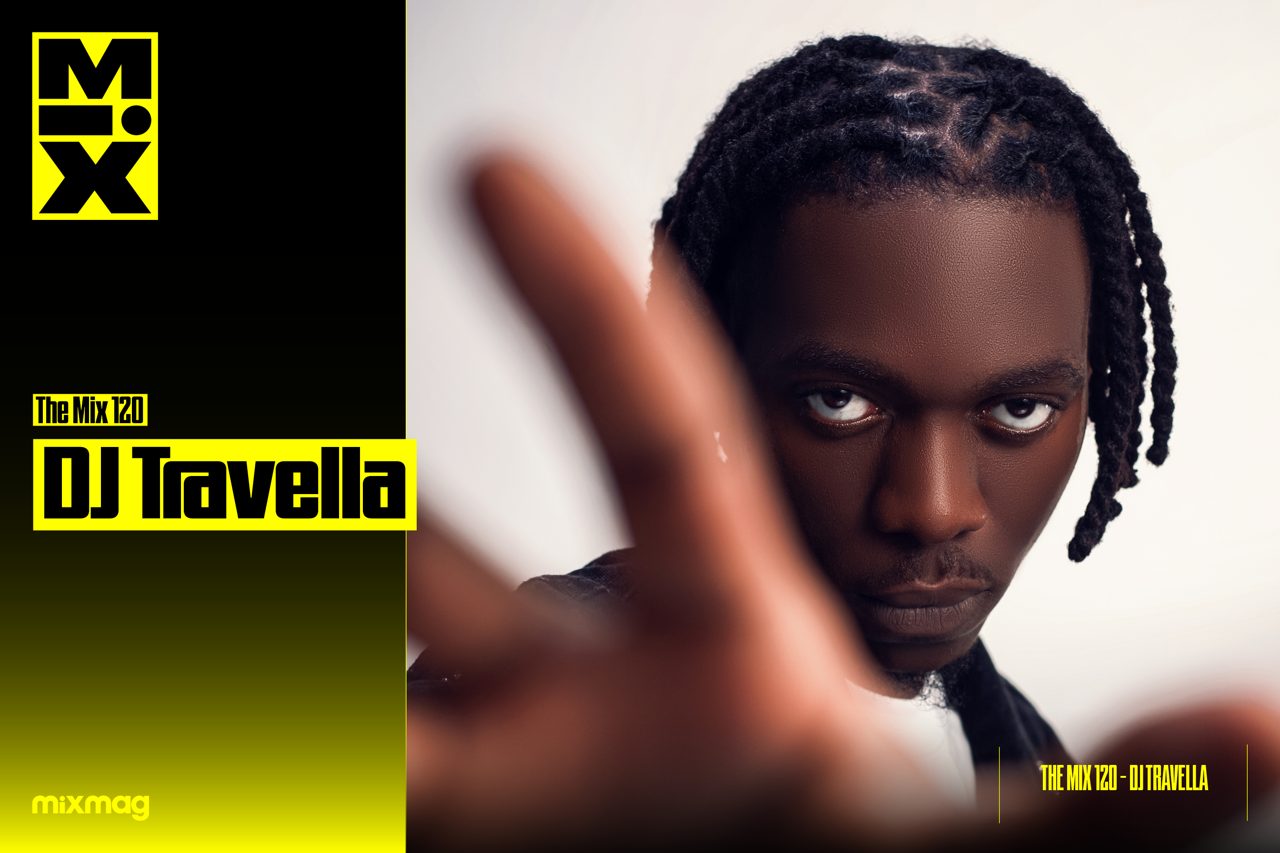
The cyber-singeli pioneer tells us about his futuristic take on the Tanzanian dance sound and teases the direction of his next album with a mix that pulls from global underground dance music Continue reading...
When DJ Travella plays a singeli party in Europe he keeps the tempo at around 160 BPM. It’s the slower end of his hometown’s signature sound; a more accessible tempo than the breakneck tracks mixed in Dar es Salaam, Tanzania. Here dancers can go for 10 to 12 hours dancing nonstop at 200 BPM. But newcomers can’t keep up. “I need people to dance to my set,” he tells me over the phone, a few days before the last leg of his European tour.
At 25, Travella, real name Hamadi Hassani, is leading a new wave of singeli artists taking the street-born sound into its next evolution. Having grown up listening to the works of pioneering studios like Sisso and Pamoja , Hassani started producing in his early teens, teaching himself the basics on FL Studio. Like his forebears, Travella took Tanzanian rhythms such as Mchiriku (a percussive genre popularised in the 1980s) and Taarab (a traditional melodic sound), and sped them up, adding loops, distortions and internet samples.
But, unlike his forebears, Hassani’s singeli does not include lyrics. Its euphoric and experimental sonic sensibilities are equally at home in a club setting as they are at a street party. He takes the energy and DIY heart of the Tanzanian youth movement and fuses it with kindred electronic genres from across the globe, creating his own distinct subgenre dubbed “cyber-singeli”.
The genre name (coined by the artist himself) recalls both Travella’s technical process of chopping, shuffling and warping samples into new shapes, but also his own immersion in the digital world as a means of discovery. In 2022, the artist released his debut album ‘Mr. Mixondo’ via Nyege Nyege Tapes , bringing cyber-singeli international attention, and garnering respect from the likes of Arca and Björk (the former opened her Caracas Boiler Room set with ‘Crazy Beat Music Umeme 1’, the album’s first track).
It also propelled the young DJ’s career, leading to bookings everywhere from Berlin to Jakarta, São Paulo and New York, with recent festivals including Nuits sonores , WOMAD and the Bermondsey Triangle Takeover. This year, he gears up to drop his second album, with plans to expand the possibilities of singeli even further and reach new audiences.
I’m good, I’m just coming to the end of a two-month tour across Europe. Now I have two weeks at home.
Of course, but it's my dream. Every tour helps to introduce singeli to new audiences, and once I’m 10 or 20 minutes into my set, I feel like I'm home anyway and everything is fine.
When you’re on tour, how do different audiences across the world respond to singeli?
Every audience is different, but the feeling is always the same. At first, some people are surprised because singeli is so fast, but after a few minutes, they understand the energy. You don’t need to speak Swahili to feel it. I’ve seen people from Europe, South America and many other places connect through the rhythm. That’s what I love about singeli, it speaks through movement.
Read this next: The Oontz: A self-sustaining electronic music ecosystem is evolving in East Africa
Kigodoro is a community street party where DJs, MCs and dancers come together. It’s where people celebrate, compete and share new music. Singeli grew out of that culture. It wasn’t created by one person, it came from the energy of the streets and the community. Kigodoro is where the sound found its identity.
What is cyber-singeli and how does it differ from earlier singeli sounds?
Cyber-singeli is my way of imagining what singeli can become in the future. I keep the speed and raw energy of traditional singeli, but I combine it with futuristic sound design, electronic music and influences from global club culture. I have a lot of respect for pioneers like Sisso and Pamoja , because they helped build the foundations of modern singeli.
My goal is to expand the sound, not replace it. I want to show that singeli can continue evolving while staying true to its roots.
Your debut album ‘ Mr. Mixondo ’ took inspiration from techno to dembow, R&B to trap. What influences will you be pulling from in your next album?
I’m always listening to different music while I’m travelling. Right now, I’m inspired by Brazilian funk , African electronic music, experimental club sounds, techno and many local styles from different countries. I don’t think too much about genres, I think about energy. As long as it still feels like singeli, I’m open to exploring new ideas and creating something fresh.
Read this next: The UK loves baile funk, but does it understand it?
What are the similarities between singeli and kuduro ? And how does this scene inspire you?
Singeli and kuduro both come from local communities and are built around rhythm, movement and high energy. They are music made for the streets, but they've also reached international audiences without losing their identity. I really respect that, and it inspires me to keep pushing singeli forward while staying connected to where it comes from.
Jay Mitta and Pili Pili Girls . Their styles are very fast and different to mine.
Where do you think singeli will go next? Are there other young artists pushing this sound in a new direction?
I think singeli is only getting started. More producers are experimenting with new sounds, new production techniques and collaborations while respecting the culture behind the music. I hope more young artists get the chance to travel, collaborate and share singeli with the world. The future of singeli is global, and I want to be part of helping it reach even more people.
Delivering the unpredicted with my ever-changing take on singeli. Fast-paced, high-energy music from Tanzania.